
Views: 0 Author: Site Editor Publish Time: 2025-11-17 Origin: Site


Choosing the best material for high-frequency PCBs is a game-changer in modern electronics. As we push for faster, more reliable technologies like 5G and radar, selecting the right material is crucial for maintaining signal integrity.
In this article, we will explore the key properties of materials that impact high-frequency PCB performance. You’ll learn how to choose the best options to ensure optimal efficiency and reliability in your designs.
The dielectric constant (Dk) is a critical property in high-frequency PCB design. It defines how a material reacts to an electric field and directly influences signal speed and impedance. For high-frequency applications, a material with a low Dk is preferable as it allows signals to propagate faster with reduced delay. High-frequency PCBs, especially those used in digital and RF circuits, require materials that maintain low Dk to reduce signal distortion and improve overall circuit performance.
The loss tangent (Df) measures the amount of signal energy lost as heat within a dielectric material. A lower Df value indicates less energy loss, which is essential for maintaining signal integrity in high-frequency PCBs. Materials with low Df values ensure that signals remain clear and strong, even over long traces or at higher frequencies. High-frequency PCB designs, particularly those exceeding 5 GHz, require low-loss materials to avoid significant signal degradation.
Thermal stability is another essential factor in high-frequency PCB material selection. High-frequency circuits tend to generate heat, and materials must maintain their electrical properties even under temperature fluctuations. Materials like PTFE (Polytetrafluoroethylene) and advanced laminates are preferred for their ability to withstand high temperatures without degradation. Poor thermal stability can lead to performance drops or even failure, especially in demanding applications like automotive radar or satellite communications.
FR4 is the most commonly used material in PCB manufacturing. It offers good electrical insulation and mechanical strength at a relatively low cost, making it suitable for standard applications. However, FR4 has limitations in high-frequency designs. Its higher dielectric constant (around 4.3 to 4.7) and loss tangent (0.02) make it unsuitable for applications above 1 GHz. As frequencies increase, the signal loss and impedance mismatch issues become more pronounced, making alternative materials more viable.
PTFE is a preferred material for high-frequency PCB applications due to its low dielectric constant (around 2.1) and exceptionally low loss tangent (as low as 0.0003 at 10 GHz). PTFE ensures minimal signal delay and attenuation, making it ideal for microwave and RF applications. Although more expensive and harder to process than FR4, PTFE is unmatched when it comes to maintaining signal integrity in high-frequency designs.
Advanced laminates, such as Rogers materials, are specifically designed for high-frequency PCB applications. These materials offer a wide range of dielectric constants (from 2.2 to 3.5) and low loss tangents (0.001 to 0.003). They provide better signal integrity than FR4, making them suitable for telecommunications, aerospace, and other high-performance sectors. Advanced laminates also offer better thermal stability, which is essential for maintaining consistent performance in varying operating conditions.
Ceramic substrates are widely used in high-frequency and high-power applications due to their excellent thermal dissipation and low dielectric loss. Materials like alumina or beryllium oxide are commonly used for RF applications, where signal loss needs to be minimized. However, ceramic materials are typically more expensive and challenging to process compared to FR4 or PTFE. Their mechanical properties, including brittleness, can also pose challenges in certain designs.
Material | Dielectric Constant (Dk) | Loss Tangent (Df) | Thermal Stability | Common Applications |
Rogers | 2.2 - 3.0 | 0.001 - 0.003 | High | RF, Microwave, 5G |
PTFE | 2.1 | 0.0003 | High | Microwave, RF, Satellite |
Advanced Laminates | 2.2 - 3.5 | 0.001 - 0.003 | High | Telecommunications, Aerospace |
FR4 | 4.3 - 4.7 | 0.02 | Moderate | Low-frequency, Consumer Electronics |
Rogers materials, such as RO3000 and RO4000 series, are engineered specifically for high-frequency applications. These materials offer lower dielectric constants and loss tangents than FR4, allowing for more efficient signal propagation and reduced attenuation. They are ideal for applications above 3 GHz, where FR4 fails to maintain signal integrity. Rogers materials also provide better impedance control, making them the go-to choice for telecommunications, RF, and microwave circuits.
While FR4 remains a cost-effective choice for low-frequency applications, it becomes problematic at high frequencies. The higher Dk and Df values of FR4 result in slower signal propagation and higher signal loss, which is unacceptable in high-frequency circuits like those used in 5G or satellite communications. As the frequency increases, these drawbacks become more significant, necessitating the switch to more specialized materials like Rogers or PTFE.
When choosing between Rogers and FR4, cost is often a decisive factor. FR4 is much cheaper, making it a viable option for budget-conscious projects with lower-frequency requirements. However, for designs operating at high frequencies (above 1 GHz), investing in Rogers materials or PTFE is often necessary to ensure signal integrity and performance. It's crucial to balance the cost with the performance needs of your design, especially in critical applications like 5G infrastructure or aerospace communications.

Impedance control is a fundamental consideration in high-frequency PCB design. For high-frequency signals to travel without distortion, the PCB material must provide consistent impedance throughout the board. Materials like Rogers or PTFE are designed to offer stable impedance, crucial for preventing signal reflections and ensuring that the signal remains coherent across the entire board.
Signal integrity is directly affected by the material's dielectric properties, including Dk and Df. Low-loss materials are essential for ensuring that signals maintain their strength and clarity, especially in long transmission lines. High-frequency PCB designs need to prioritize materials that minimize signal loss, reflections, and other forms of interference, which can severely impact performance.
High-frequency PCBs are often exposed to harsh environmental conditions, such as temperature fluctuations, humidity, and mechanical stress. Materials with high thermal stability and low moisture absorption, such as PTFE or ceramic substrates, are better suited for these conditions. Additionally, the material's mechanical properties, such as flexibility and strength, must align with the physical demands of the application.
Property | Impact on PCB Design |
Dielectric Constant (Dk) | Affects signal speed and impedance; lower Dk improves performance |
Loss Tangent (Df) | Lower Df minimizes signal loss and heat generation |
Thermal Stability | Ensures performance under temperature fluctuations |
Impedance Control | Key for ensuring minimal signal reflections and loss |
Fabricating high-frequency PCBs with materials like PTFE and advanced laminates can be more challenging than working with traditional FR4. These materials often require specialized handling, processing techniques, and equipment. PTFE, for example, is difficult to bond and etch, which can increase production costs and lead times. It's essential to collaborate with experienced manufacturers who can handle these materials efficiently.
Thermal management is crucial in high-frequency PCB manufacturing. Materials like PTFE and Rogers offer excellent thermal stability, but proper temperature control during fabrication is necessary to prevent thermal damage. Inconsistent heating during processes like soldering or lamination can cause warping or signal degradation, so maintaining optimal temperature conditions is essential.
The thickness and panel size of PCB materials directly affect the design and manufacturing process. Thicker materials can provide better thermal and mechanical performance but may be harder to fabricate. On the other hand, thinner materials are easier to work with but may not offer the same performance benefits. For high-frequency applications, it is important to choose materials that provide the necessary thickness and performance balance.
When selecting materials for high-frequency PCBs, it is essential to match their properties (Dk, Df, thermal stability) to the specific requirements of your application. For example, 5G circuits require materials with low Dk and low Df to ensure fast, clear signal transmission. For satellite communications, materials with high thermal stability and low moisture absorption, like PTFE, are ideal.
Before committing to full-scale production, it's crucial to prototype your high-frequency PCB and use simulation tools to verify the material's performance. Simulation tools can help identify potential issues with signal integrity, impedance, and thermal management early in the design process, saving both time and resources.
Collaborating with PCB manufacturers who specialize in high-frequency designs is essential. They can provide valuable insights into material selection, fabrication challenges, and performance optimization. Working closely with these experts ensures that your design is feasible and meets the required standards for high-frequency applications.
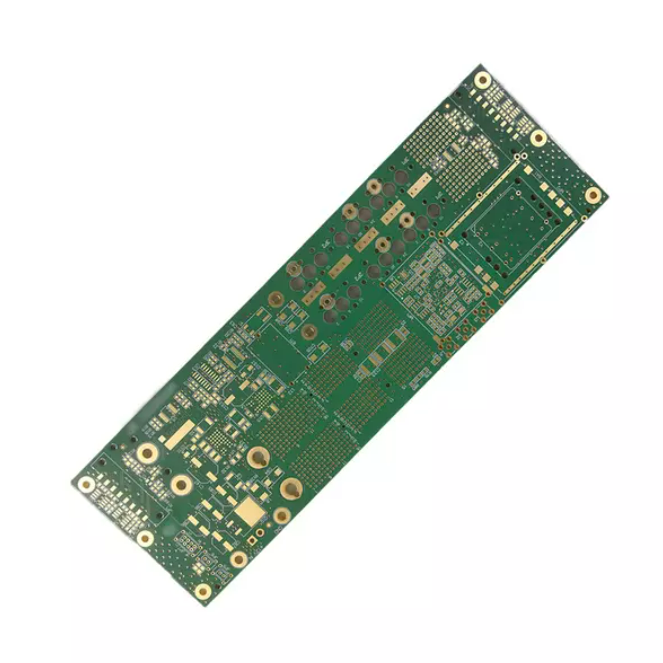
As high-frequency applications continue to evolve, there is an increasing demand for materials with even lower loss tangents and dielectric constants. Emerging technologies, such as flexible PCBs and novel dielectric materials, are expected to play a significant role in the future of high-frequency PCB design, offering improved performance and lower costs.
With the rise of 5G and the Internet of Things (IoT), the demand for high-frequency PCBs is expected to grow significantly. Manufacturers will need to develop materials that can handle the demands of these high-speed, high-performance applications, pushing the boundaries of current PCB materials and fabrication techniques.
Selecting the best material for high-frequency PCBs involves considering key properties like dielectric constant, loss tangent, and thermal stability. Materials such as Rogers, PTFE, and advanced laminates ensure optimal signal integrity and performance.
For high-frequency applications, choosing the right materials and collaborating with experts is essential. Ruomei Electronic provides high-quality PCBs designed to meet the needs of modern, high-performance electronics. Their reliable solutions can help you achieve the best results for your designs.
A: The best materials for high-frequency PCBs include Rogers, PTFE, and advanced laminates. These materials have low dielectric constant and loss tangent, ensuring minimal signal loss and excellent performance.
A: The dielectric constant (Dk) affects the signal speed and impedance of the PCB. A lower Dk results in faster signal propagation and better signal integrity, crucial for high-frequency applications.
A: The loss tangent (Df) measures how much signal energy is lost as heat. A lower Df reduces signal attenuation, ensuring higher efficiency and signal integrity in high-frequency PCBs.
A: PTFE offers excellent dielectric properties with low Dk and Df, making it ideal for microwave and RF applications. It ensures stable performance and minimal signal loss at high frequencies.
A: While FR4 is cost-effective, it is not ideal for high-frequency PCBs. Its higher Dk and Df values can lead to signal loss and distortion, especially at frequencies above 1 GHz.
A: Thermal stability is crucial for maintaining signal integrity in high-frequency PCBs. Materials that perform well under temperature fluctuations ensure reliable operation in dynamic environments.

