
Views: 0 Author: Site Editor Publish Time: 2025-11-18 Origin: Site


In electronics manufacturing, PCBA testing is crucial for ensuring that circuit boards and their components function as intended. Early defect detection helps reduce production costs, prevent failures, and maintain product quality. This article compares various PCBA testing methods, highlighting their strengths and weaknesses. By understanding these methods, manufacturers can select the right testing strategy to optimize production efficiency and product reliability.
PCBA testing involves verifying the electrical and mechanical performance of printed circuit board assemblies (PCBAs). The goal is to identify defects in the board and its components to ensure the board functions correctly and meets design specifications. This testing process includes several methods, each designed to detect specific types of faults, such as component failures, soldering issues, or connectivity problems.
Without PCBA testing, defects may go undetected, leading to malfunctioning products or costly recalls. Testing ensures that each board operates as intended, preventing issues that could affect the product's performance in real-world conditions. Moreover, it helps avoid rework, reduces scrap rates, and improves production timelines, which ultimately enhances manufacturing efficiency.
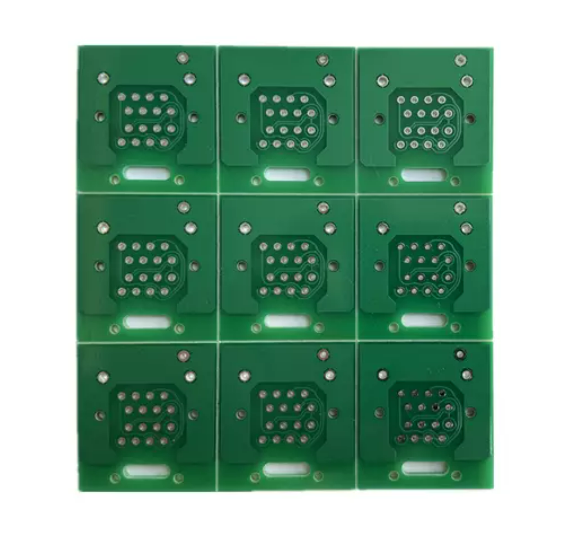
In-Circuit Testing (ICT) is one of the most commonly used methods for verifying the functionality of individual components on a PCB. It uses a custom fixture, often referred to as a "bed of nails," to test each component's electrical performance. ICT is ideal for high-volume production due to its speed and high fault coverage. However, the initial setup cost for custom fixtures can be significant. While ICT excels at detecting electrical issues like open circuits, shorts, and incorrect component values, it cannot identify certain mechanical defects or assess the overall performance of the board in real-world conditions.
Functional Testing (FCT) tests the complete board by simulating real-world operating conditions. Unlike ICT, which focuses on individual components, FCT evaluates the board's overall performance, ensuring it functions as expected in its final application. This method is particularly useful for verifying system-level issues such as logic errors or interface problems. However, FCT is more time-consuming than ICT and requires custom testing fixtures, making it less suited for high-volume production. It’s most commonly used for final product validation or low-volume production runs.
Flying Probe Testing is a more flexible and cost-effective alternative to ICT. It uses robotic probes to make contact with the board's test points, testing the board's electrical performance without the need for a custom fixture. This method is ideal for prototypes, small batches, or designs with frequent changes. While flying probe testing is slower than ICT and may not be suitable for large-scale production, it offers the advantage of lower setup costs and greater flexibility.
Automated Optical Inspection (AOI) uses high-resolution cameras to capture detailed images of the board and compare them with a reference design. AOI excels at detecting visible defects such as misaligned components, solder bridges, or missing parts. It is non-destructive and fast, making it ideal for high-volume production. However, AOI is limited to detecting surface defects and cannot identify electrical issues or hidden faults within the board's internal layers.
X-Ray Inspection (AXI) is a powerful method for detecting internal defects in components like BGAs (Ball Grid Arrays), where solder joints are hidden from view. AXI uses X-rays to produce images that reveal hidden issues, such as solder voids or bridging, that other methods, like AOI, cannot detect. While AXI offers high accuracy and is essential for complex assemblies, it is expensive and requires skilled operators. It’s best suited for high-density or high-reliability applications, such as automotive or medical devices.
Testing Method | Primary Focus | Advantages | Disadvantages | Best For |
In-Circuit Testing (ICT) | Electrical component testing | High fault coverage, fast diagnostics | High initial cost, requires custom fixtures | High-volume production |
Functional Testing (FCT) | Full system functionality | Real-world simulation, comprehensive | Time-consuming, requires custom fixtures | Final validation, mass production |
Flying Probe Testing | Electrical testing, flexible | No fixtures needed, cost-effective | Slower than ICT, not ideal for high volumes | Prototypes, low-volume production |
Automated Optical Inspection (AOI) | Visual defect detection | Fast, non-destructive, ideal for high throughput | Cannot detect internal faults | Early-stage defect detection |
X-Ray Inspection (AXI) | Hidden defects (e.g., BGA solder) | Detects internal defects, ideal for high-density boards | Expensive, requires specialized training | Complex assemblies with hidden joints |
Laser Inspection uses lasers to scan the surface of the board and measure its features with high precision. This method is particularly useful in early-stage production for inspecting bare boards. Laser inspection is non-destructive and does not require custom fixtures, but it has high initial costs and ongoing maintenance requirements. It’s ideal for ensuring that bare boards meet dimensional and structural standards before assembly.
Cross-Section Analysis involves physically cutting a sample from the board and analyzing it under a microscope. This method helps identify internal defects such as poor soldering, incorrect copper plating, or structural issues. While cross-sectioning provides the most detailed analysis, it is destructive and can only be performed on a small sample of the product. It is often used for failure analysis or to validate manufacturing processes.
Burn-In Testing subjects boards to extreme conditions, such as high temperatures or voltages, to accelerate aging and detect early failures. This test helps identify components that might fail prematurely under normal operating conditions. While burn-in testing improves reliability and is especially important for high-reliability products like medical or automotive devices, it can be time-consuming and may reduce yield due to the stress placed on the components.
Solderability Testing ensures that the board's components and pads can properly adhere to solder during the assembly process. This test is essential for avoiding weak solder joints, which can lead to intermittent connections or failures. It is commonly performed as part of incoming quality control (IQC) to ensure the reliability of components before they are used in production.
PCB Contamination Testing detects harmful residues left on the board after the manufacturing process, such as flux or cleaning agents. These contaminants can lead to electrochemical migration, causing short circuits or corrosion over time. This test is crucial for maintaining long-term product reliability, especially for high-impedance or high-reliability applications.
The choice of PCBA testing method depends on the production volume and the complexity of the product. For high-volume production, methods like ICT and AOI are cost-effective, as they offer fast, automated testing with high fault coverage. For smaller batches or prototypes, Flying Probe Testing and FCT are more suitable, though they may come with higher per-unit costs due to the time and customization required.
Testing Method | Cost Implications (Setup/Running) | Benefit (Efficiency) | Ideal Volume |
In-Circuit Testing (ICT) | High setup cost, ongoing costs for fixtures | High speed, precise fault detection | High-volume production |
Functional Testing (FCT) | Custom fixtures increase cost | Comprehensive system-level validation | Mass production |
Flying Probe Testing | Low setup cost, no fixture required | Flexible but slower testing | Prototypes, small-batch runs |
Automated Optical Inspection (AOI) | Moderate setup cost (machine) | Fast detection of visible defects | High-volume production |
X-Ray Inspection (AXI) | High setup cost, expensive equipment | Best for hidden defects and complex assemblies | High-density, complex designs |
Each PCBA testing method excels in different areas of defect detection. AOI is ideal for surface defects, ICT is best for electrical testing, and FCT ensures overall system functionality. Combining multiple testing methods, such as ICT + AOI + FCT, can provide comprehensive coverage for both visual and electrical defects, ensuring product quality and reliability.
The choice of testing method should align with the product's complexity and intended application. X-Ray Inspection (AXI) is essential for high-density components, while AOI is best suited for simple designs. For mission-critical applications like automotive or medical devices, combining advanced tests such as Burn-In Testing and Contamination Testing ensures the highest levels of reliability.
Testing Method | Advantages | Limitations |
In-Circuit Testing (ICT) | High speed, accurate fault location | Expensive setup, inflexible for design changes |
Functional Testing (FCT) | Ensures overall functionality | Requires custom fixtures, time-consuming |
Flying Probe Testing | Flexible, cost-effective for prototypes | Slower than ICT, not suited for mass production |
Automated Optical Inspection (AOI) | Fast, non-destructive, good for mass production | Limited to visual defects, not for hidden faults |
X-Ray Inspection (AXI) | Best for detecting internal defects | Expensive, requires highly trained operators |

Selecting the right PCBA testing method depends on the production goals. For high-volume production, ICT and AOI are ideal for their speed and automation. For small-batch or prototype testing, Flying Probe Testing and FCT offer more flexibility without the need for custom fixtures.
For high-reliability products, it’s crucial to implement a combination of testing methods to address different failure modes. Methods like Burn-In Testing and Solderability Testing can be combined with ICT or AOI to ensure the product performs well under stress and meets quality standards.
Manufacturers should consult with experienced PCBA testing providers like Ruomei Electronic to tailor a testing strategy that best suits their product and production needs. By partnering with experts, manufacturers can optimize testing processes, reduce costs, and ensure the reliability of their products.
Choosing the right PCBA testing methods is essential for ensuring high product quality and reliability. By balancing cost, speed, and fault detection accuracy, manufacturers can optimize production processes and minimize defects. For complex or high-reliability products, partnering with an experienced provider like Ruomei Electronic ensures an effective testing strategy, helping secure long-term product success.
A: PCBA testing ensures that circuit boards and their components function correctly. It evaluates electrical and mechanical performance to detect defects early, ensuring high product quality.
A: PCBA testing helps identify defects early, reducing costly rework and improving production timelines. It ensures boards meet performance and reliability standards.
A: ICT focuses on electrical integrity, testing components individually, while FCT simulates real-world usage to check overall board performance under operational conditions.
A: Flying Probe Testing is more flexible and cost-effective for small-batch production, whereas ICT is faster and better suited for high-volume production with custom fixtures.
A: AOI uses high-resolution cameras to detect visible defects, providing a fast, non-destructive inspection method ideal for high-throughput production.

